Friday, March 11, 2016

Easter decoration ideas

Easter is coming and if you are someone who enjoys making your own Easter decor, I have a great collection of ideas for you. Each of these ideas feature bright colors, pretty flowers, or other spring embellishments, making them the perfect choice for your Easter decorating.
Grab your creativity and find the project that best suits your decoration needs.
If you’re looking for a fun activity, try a few of these creative ideas for decorating Easter eggs! 
These sprinkle Easter eggs are quite delicate but so pretty! Source

Glitter Easter eggs - They’re beautiful, aren’t they? Source

Other amazing  and easy to make ideas
All you need for this monochromatic look is a fine-tipped black permanent marker, overall effect is clean and modern. Source
I think I will try it this year but with colorful marker


Use string or baker’s twine to secure flowers and herbs to eggs

Break out some acrylic paint to try this egg-decorating trend . Source

Easter table decorations and centerpieces are the perfect way to prepare for any spring dinner with friends or parents. 
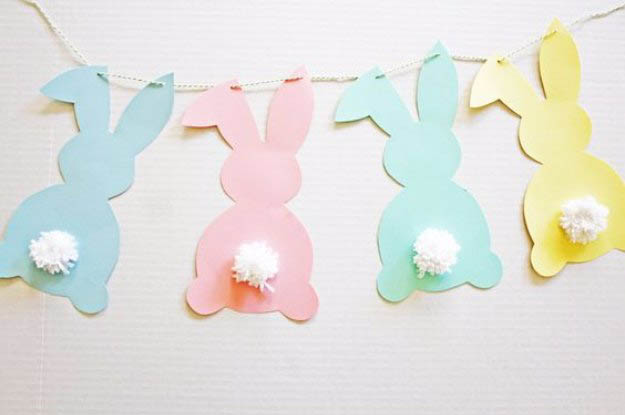
Cotton Tail Bunny Garland is a great project to make with your kids. Source

Unique napkin folds can make a table setting extra entertaining.  Bunnies we made last year and this year I found this wonderful idea – you can fill the pouch with flowers or chocolate eggs. Source

With origami bunnies you can make a garland or simply put on the plate. Source

A well decorated table is what turns an ordinary meal into a holiday. Get your table into the holiday spirit with some creative and very cute Easter table decorating ideas.


Follow my blog with Bloglovin

Monday, March 7, 2016

The History of the Paisley Pattern and it’s modern return

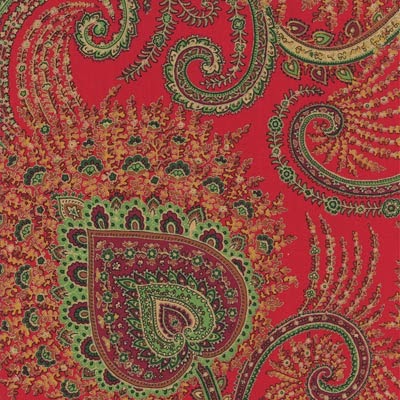
Since 1800s when it  first appeared on women shawls, the paisley pattern went in and out of fashion many times. The pattern that we know as “paisley” is named after the eponymous town in Scotland, but it didn't originate there.  Paisley is a decorative pattern in the form of drops with floral ornaments.  This pattern known also as a Persian or Indian cucumber. 
Wood handstamp for Textile printing traditional "paisley" designs, Isfahan, Iran

There are many theories about origins of the paisley pattern. One theory is that it originated in ancient Babylon during Sassanid Dynasty, a period of time that stretches back to around 221AD. It took its inspiration from the growing shoot of the date palm, also regarded as the "tree of life", since it was important to Babylonians because of with food, drink, clothing and shelter provided by it.  The motif spread from Babylon to India where it was incorporated into all types of design.
Persian silk brocade from the Pahlavi Dynasty.

In Tamil culture, another region famed for its love of the pattern, the paisley design is known as Mankolam, as it resembles a Mango. Mango fruit is incredibly highly prized amongst the Tamil, it being a symbol of health, peace and prosperity.  The symbol was not only used as a design to go into fabric, but something that would also be used in jewellery designs too, particularly for gold earrings or pendants.

Many cultures in Middle Asia have used paisley pattern as part of their national ornaments. It has been widely used in the Kingdom of Kashmir - the famous textile center in northern India to decorate shawles.  Like  many other luxury goods the shawls arrived in Britain in the 18th century when travellers, explorers and military personnel as well as members of the East India Company brought them back as presents for their wifes, mothers ad sisters.  The Kashmir shawl quickly became popular. For a period of nearly 100 years, 1790-1870, they were de rigeur for wear by stylish women. Like today, the finest of these were made of cashmere from the Himalayans and Mongolia. 
Mother with two children by A.E. Chalon, 1812

This pattern is almost universally known for the town which gave rise to its popularity in the 18th and 19th centuries - Paisley, Scotland. Over time, the demand for paisley shawls greatly increased in Europe and imported shawls could not satisfy it, so it became necessary to produce paisley shawls in Europe. British textile manufactures seized the opportunity to reproduce these Kashmir shawls. The real hurdle was in creating a shawl that had the same feel as Kashmir.  

The first shawls woven in Paisley were made around 1808, and by 1850 there were over 7000 weavers in the town. During the latter stages of the Victorian era, more technological developments meant that as well as the pattern being weaved into shawls it could also be printed onto cloth and garments. Once this happened, its popularity spread further, as it suddenly became much cheaper.
Shawl fragment late 18th century, Weaving Art Museum

But there were a number of reasons that Indian shawls remained popular despite the availability and relative affordability of European produced shawls. One reason was the superiority of cashmere to the wool and silk mixes available in Europe, the other was the superiority of Indian and Kashmiri weaving technology. Indian weavers could weave shawls that were fully reversible, and they could weave many more colours into one shawl than was possible on European looms.


The decline of the paisley shawl in the early 1870s can be traced to a variety of events. Fashions changed and with the advent of the bustle a shawl could not fall down the back easily, the Franco-Prussian war of 1870-1871 halted exports of shawls from Kashmir, resulting in the collapse of the industry, and by 1870 a woven Jacquard shawl could be bought for £1 with an identical patterned cotton shawl for a few shillings. 
It’s clear that while the pattern has experienced ups and downs over the years and tastes have changed, it will never truly disappear and will always have a place somewhere in our wardrobe or home. 
Woman’s informal robe made from paisley shawl, c. 1890


The new return of paisley takes another 70 years until 1960s, when pop icons including The Kinks, The Rolling Stones and Jimi Hendrix began to explore musical and artistic influences from Asia. Due to its association with musicians and flamboyant lifestyles, and its stark contrast to the sober men’s fashions that had preceded it, the paisley motif became a symbol of rebellion and non-comformity. 

Cifonelli suit made from reverse of 19th century paisley shawl, 1960


. Paisley print is commonly found today on men’s ties and handkerchiefs. It has also recently resurfaced on women’s skirts and handbags. More recently, paisley print experienced a revival of sorts in a more modern version a skirt. 


Now paisley back again for bohemian fashion and decor.  


This is a pattern that can be found on so much more than just textiles. 

Paisley is also perfect for home décor: curtains, pillows, furniture and craft projects. I’ve found plenty of designs created by contemporary artists using this motif. 


Follow my blog with Bloglovin

Saturday, February 20, 2016

Pantone’s Colors of 2016: Rose Quartz and Serenity Blue


The experts at Pantone already announced the annual Color of the Year. It’s not one, but a combination of two shades, for the first time ever  - Rose Quartz and Serenity Blue - they are shades of pale pink and baby blue. Pantone described these colors as “a harmonious pairing of inviting shades that embody a mindset of tranquility and inner peace.”
Rose Quartz evokes a sunset, budding flower, or flushed cheek, while Serenity conjures an expanse of bleached blue sky. Worn separately, they don't have the same power of calmness as they do when worn together.
The pairing offers a variety of lip, cheek and eye palette options, as well as hues for nail color. Flattering against many skin tones, beauty looks pairing the lighthearted, healthy glow of Rose Quartz, with the cool, refreshing tone of Serenity, create a soft and natural statement. Done with a natural, light touch, the flattering pink that enhances the lip, cheek and eye, can be blended with a hint of the cool blue tone that contributes to a beautiful, neutral-based eye shadow palette, accented by classic solid nails or creative nail art that incorporates both shades in the design.

After this news I decided to see if I have something in my shop in these colors and I found!
Here they are:
Rose Quartz


Serenity Blue


Thursday, February 18, 2016

Broccoli with greek yogurt casserole recipe

Lastly I made a lot of times this casserole, because it's light and easy to cook.

Ingridients:

  • Broccoli, about 800gr
  • 5 eggs
  • 300 gr of greek yogurt 
  • 100-150gr if cheese you use for casserole (I used smoked scamorza)
  • 1 glove of garlic
  • salt and pepper
I don't boil broccoli before but cook it directly in oven, because in this way they are more tasty.
We need to prepare the sause - beat up eggs and then add the greek yogurt. It should be not directly from cooler. Meantime switch on the over on 175°CYou need a garlic press to crush garlic glove.  Add crushed garlic into your sause  and mix well. Add salt and pepper - small portion because the sause will reduce in the oven. Grate the cheese and mix with sause.  Add a little of water if you want the sause to be more liquid.

Cut broccoli into florets and put them very tightly in casserole. Pour the sause over it . If you beated well eggs the sause will remain airy. Cook the casserole until broccoli will be ready - about 40-45min (try them with a fork to be sure)


Follow my blog with Bloglovin
 

©2009 Katrinshine | by TNB